

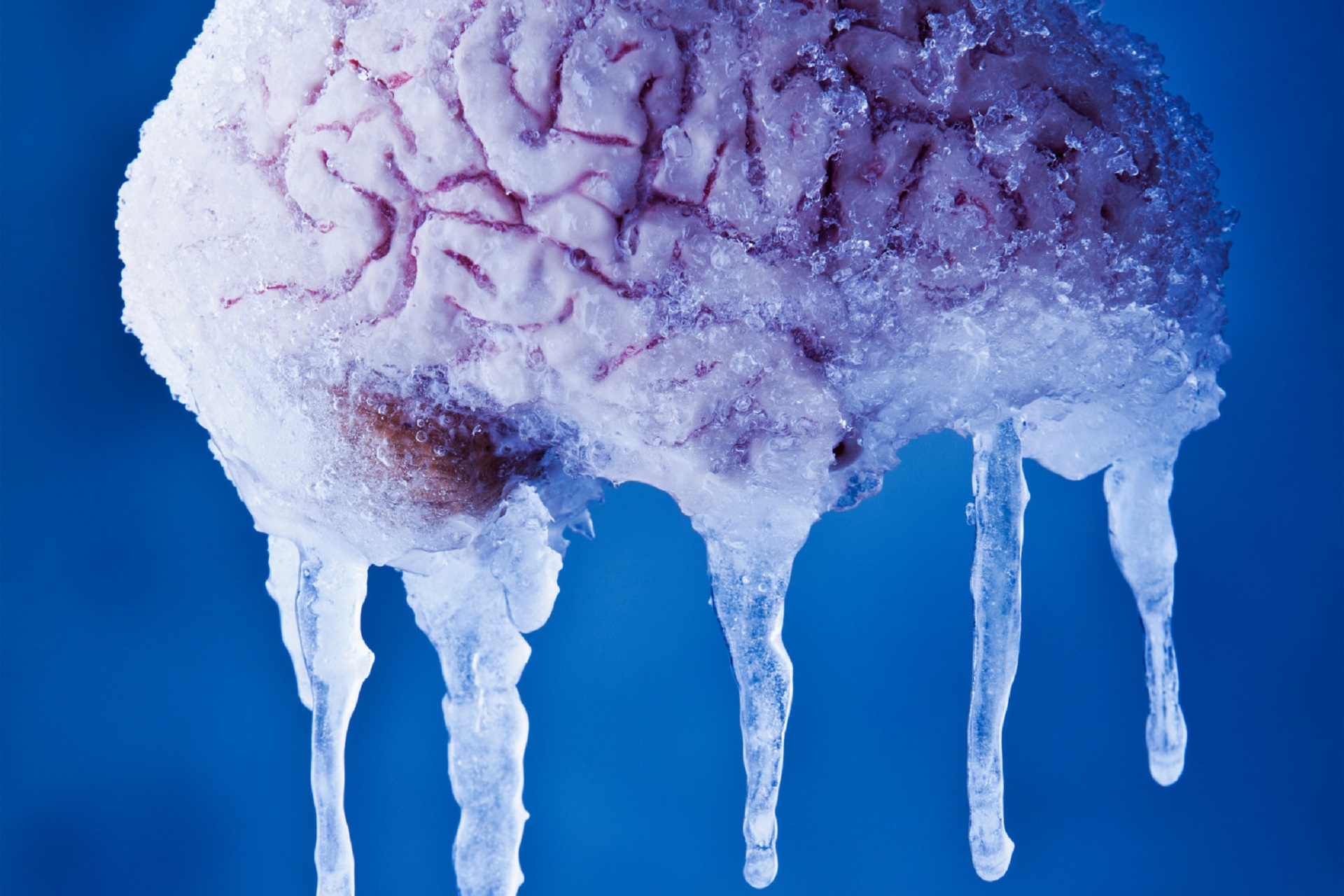
You take a big bite of ice cream or gulp down a frozen drink, and suddenly a sharp pain shoots across your forehead. That is brain freeze, also called an ice-cream headache or, medically, a cold-stimulus headache. The strange part is that your brain is not actually freezing. The pain starts when something very cold touches the roof of your mouth or the back of your throat, and scientists are still piecing together exactly what happens next. Thankfully, there is a very simple way to make it stop.
What causes brain freeze?
The cold never reaches your brain. Instead, cold food or drink stimulates nerves in the roof of your mouth and throat, which are richly supplied by branches of the trigeminal nerve, one of the main nerves carrying sensation from your face. That explains the oddest thing about brain freeze: you feel the pain in your forehead or temples, not where the ice cream actually touched. Your brain receives a pain signal through one part of the trigeminal nerve system and interprets it as coming from another, which is known as referred pain.
The 2012 experiment
For years, brain freeze was easy to describe but hard to explain. Then, in 2012, Jorge Serrador and colleagues at Harvard Medical School gave volunteers brain freeze on purpose. As Live Science reported, 13 healthy adults sipped ice water through a straw pressed against the roof of the mouth while the researchers measured blood flow in their brains with an ultrasound-like scan. Just as the pain began, blood flow surged through the anterior cerebral artery, a vessel that runs behind the eyes, and when the artery constricted again, the pain faded. Serrador suggested this might be a protective response, rushing warm blood in to keep the brain at the right temperature. It was a very small study, though, and it did not prove that blood flow is the whole story. The best description today is a cold-triggered response involving both the trigeminal nerve and the brain’s blood vessels.
How long it lasts, and how to stop it
The pain can be intense, but it is usually very brief. In a 2020 study of 618 people, just over half had experienced brain freeze, and 92.7% of their episodes lasted less than 30 seconds, according to Neuroscience News. To make it stop faster, stop eating or drinking the cold thing, then warm the roof of your mouth by pressing your tongue firmly against it, as Medical News Today suggests, or by sipping something warm or at room temperature. Prevention is even easier: slow down. In a Canadian experiment, people who ate ice cream in under five seconds were more than twice as likely to get brain freeze as those who took more than 30 seconds, as 1News reports. You do not have to give up ice cream; you just have to stop attacking it like it owes you money.
Is brain freeze linked to migraines?
This is where the science gets interesting, and less settled. In one study of 669 women, those who had had a migraine in the previous year were about twice as likely to get a headache after drinking ice-cold water as women who had never had one, 1News reports. But other research points the other way: the 2020 study of 618 people found that people with migraine were no more likely to get brain freeze, although those who did tended to feel it more intensely. Brain freeze is also common in young people, whether or not they get migraines: a large survey of 8,359 adolescents found that 41% had experienced one. So brain freeze may be a useful way for scientists to study headache pathways, but it would be too strong to call it a miniature migraine.
Is it dangerous?
For almost everyone, no. Brain freeze is a short response to a cold stimulus that normally fades within seconds, and it does not damage the brain. A sudden, severe headache that is not clearly triggered by something cold is a different matter, especially if it is new or unusual for you. Seek urgent medical help for a sudden severe headache with symptoms such as weakness, numbness, confusion, difficulty speaking, vision problems or a stiff neck, and call 000 in an emergency.
Your mouth sending a warning
So your brain is not freezing; your mouth is sending it a very convincing warning, and your brain responds by protecting itself. Stop eating the ice cream, press your tongue against the roof of your mouth, and give it a few seconds. If you enjoy the body’s strange automatic responses, see how to get rid of hiccups for another harmless reflex scientists are still trying to understand, and what is homeostasis? for the system that keeps your body’s temperature and other conditions in a safe range.
This article is general information only and is not medical advice. Brain freeze is normally harmless and short-lived. If you have a sudden, severe or unusual headache, particularly with other neurological symptoms, seek urgent medical attention or call 000.
Sources
- Live Science: Cause of brain freeze revealed (2012)
- Neuroscience News: Can eating ice cream make you scream? (2020 study of 618 people)
- 1News: What actually happens when you get a brain freeze
- Medical News Today: Brain freeze, what causes it
- Current Neurology and Neuroscience Reports: Cold stimulus headache, a review